Background

The purpose of this blog is to discuss your health and wellness. Everything from nutrition, to manual therapy, to CrossFit to Functional Movement Systems as well as pain and injuries.

Mini-Bio
I was raised in northern Virginia and played every sport they'd let me. I injured my low back/hip while playing baseball at Radford University in Virginia. I was treated by a physical therapist, an orthopedic, a primary care md, and an athletic trainer, but no one made the difference for me until I got chiropractic treatment. That day I knew what I wanted to do with my life. I'm a fitness consultant and sports chiropractor in South Florida and I'm dedicated to helping people maintain the well-oiled machine that their bodies could be. I'm certified as a Functional Rehab specialist, a Titleist Performance Institute golf fitness specialist, an Active Release Technique provider as well as a former personal trainer. To contact me, log onto www.mobility-4life.com or email me at drscotthoar@gmail.com

Thursday, April 24, 2014

Injury Free- Box Jumps

Box Jumps are a fantastic way to exercise.  It's a whole body exercise that works on your strength, power, conditioning and burns fat.  Unfortunatley many people struggle with them and end up hurting themselves.  Here are a few quick tips to get you in performing box jumps without hurting yourself (and having better performance too!)

1.  Swing Your Arms
        When one jumps, it's not the ability to push the ground down that has you jump high.  People with huge squat one rep maxes aren't the people that can jump the highest.  It's the ability to coordinate all your forces upward while transferring your forces through your core.  A highly effective way of accomplishing that is by getting a great deal of momentum going with your arms.  The more force your arms create, the less your hips, knees and ankles have to.  It's a fantastic way to keep the stress off your body.

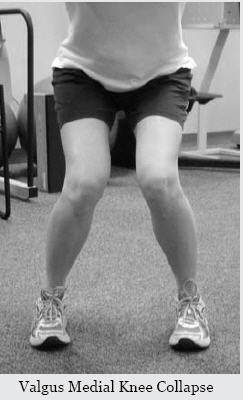
2.  Don't Let Your Knees Travel Inward

Whether its your takeoff, or your landing, don't let this happen.  You might even want to concentrate on having your knees travel to directly away from each other, as this increases stability in the foot, ankle, knee complex.  It will minimize the stress on your body.

3.  Step Down
         Now if you're a highly competitive Crossfit type you might not like this one.  It's true that if your just going for performance, jumping down is faster.  However it adds so much force to the calf, achilles tendon, ankles and plantar fascia that it significantly increases the chances of you injuring yourself.  Alternating which foot you step down off the box will allow you to minimize the stress on your body without wearing down either leg.  

If you have any questions or are injured, please email me at drscotthoar@gmail.com.  If you are in the Boca Raton area, you can visit us at www.Mobility-4Life.com

Tuesday, March 11, 2014

CryoSauna Therapy

There's an exciting new option available in the sports medicine community for those that are looking to recover quicker and have their bodies feel better.  It's called CryoSauna therapy.  In just 3 minutes, you give your system the jolt that it needs without any chemicals or harmful ingredients.

Cryo therapy has been around for years in the form of Ice Baths (Picture old time NFL players).  The purpose was to decrease inflammation in the body, stimulate increased healing rates of old injuries and improve overall energy in the body.  To read more about the historical ice baths click here.

CryoSauna therapy benefits
  • Prevents Injury
  • Speeds Recovery
  • Keeps Muscles Limber
  • Clears the Meridians 
  • Repairs Muscle
  • Decreased inflammation
  • Feels Good Afterwards
  • Decreased Muscle soreness/stiffness
  • Decreased joint pain
  • Burn 500-800 calories in 3 minutes!
But now we have the ability to get even better benefits from way less of a commitment.  The CryoSauna delivers all the same benefits in just 3 minutes by spraying subzero gasiform Nitrogen onto the skin and getting the desired reaction.

Now there is some controversy these days regarding ice therapy vs. heat therapy and if ice therapy is even beneficial to people.  At this point what we recommend is that it is for some people, and it's not for everyone.  Some people swear by ice therapy and feel as though they get fantastic results.  If that's not you...then this isn't for you.

The theory of this treatment is that when the cold nitrogen is sprayed onto the skin, the body thinks it's in a subzero environment and blood flow gets altered from the extremities, into the internal organs.  While it's in the internal organs, the blood gets oxygenated from the internal organs and lung blood vessels which carry the highest oxygen content of blood in the body.  Once the treatment is complete, the highly oxygenated blood is re-delivered to the extremities leaving you feeling like a million bucks.

It's like a highly effective RE-SET button on your body!

This gets great results with runners, triathletes, football players and anyone else that is putting a great deal of stress on their bodies.

If you have questions or are interested in CryoSauna therapy, you can call our office at 561.997.8898 or email me directly at drscotthoar@gmail.com.  To check out more visit www.Mobility-4Life.com

Monday, February 17, 2014

9 Rules to Returning to Exercise after Injury

So many of us get injured and have questions and concerns about how we should approach ramping up our activity levels to pre-injury levels after we start feeling better.  So I thought I'd make some general rules to follow.  Trainers, I'd suggesting posting this on your gym wall so your client have some future reference.

Rules to Return to Activity After Injury

Rule #1 - Get yourself checked out by a sports medicine professional.  This is their expertise, you don't want to end up hurting yourself further or again.  This will significantly speed up the process.

Rule #2 - If you feel pain, don't do it.  Don't even do a movement in which you even 'feel' the affected area, without  pain.  I think you know what I'm talking about.  When you exercise in pain, you will automatically compensate.  Why is that a bad thing?  I'll explain later.

Rule #3 - Start with non-weight bearing, non-painful exercises.  This might include rowing, or swimming, walking, cycling, or elliptical.  Getting some serious blood flow to a recently injured area can do great things as far as speeding up this whole process.

Rule #4 - Next step, body weight exercises.  This could include push ups, or air squats, lunges, pull ups, etc.  Make sure you're doing full range of motion.  Don't move on to the next step until you have full range of motion.

Rule #5 - Don't add weight until you perform the most provocative movement (if it hurts to squat, squatting would be the provocative movement) with just bodyweight, pain-free without any asymmetries of any kind.  Ask your local trainer or a gym friend that you know has a great deal of knowledge of exercise and technique.  Have them evaluate your movement from all angles.

Rule #6 - Work the opposite extremity - If the injury is to your right foot, workout the left foot while you're recovering.  This works for the upper extremity as well.  Studies show that the more this is done, the less atrophy and muscle wasting occur of the injured extremity.

Rule #7 - DON'T COMPENSATE!!!!! - This is the biggest one.  It should be number one.  "I can run if I just step towards the outside of my foot" or "I have to extend one arm before the other".  This is huge.  When you compensate you rapidly start wearing down other parts of your body.  Don't do it.  That's why you want a trainer to make sure that your exercise movement is completely symmetrical.

Rule #8 - Perform other exercise/activity.  This is a great time to do some kind of cross training.  Performing exercises you wouldn't normally perform (as long as they are completely pain and compensation free) is a great way to workout and diversify your program.  I.e. if it hurts to swim, then jog...or if it hurts to do cleans, do snatches.  Explore some yoga!

Rule #9 - Don't wear braces.  Now take this with a grain of salt.  Sometimes they are necessary in the short term.  However, braces create stability for joints which is good for acute injuries, however it creates 2 things that we don't want.  #1- dependence on the brace.  Since it's creating stability in that joint, your muscles don't have to stabilize and the stronger you get, the more dependent you will become leaving the door open to future injury.  #2 - Braces limit your flexibility in that joint which, in the long term, will create more compensation in surrounding body parts.

I hope this is helpful.  For anyone wanting to know if they are ready to return to exercise, please call my office at 561.997.8898 or email me at drscotthoar@gmail.com.  To check out more visit www.Mobility-4Life.com