Background

The purpose of this blog is to discuss your health and wellness. Everything from nutrition, to manual therapy, to CrossFit to Functional Movement Systems as well as pain and injuries.

Mini-Bio
I was raised in northern Virginia and played every sport they'd let me. I injured my low back/hip while playing baseball at Radford University in Virginia. I was treated by a physical therapist, an orthopedic, a primary care md, and an athletic trainer, but no one made the difference for me until I got chiropractic treatment. That day I knew what I wanted to do with my life. I'm a fitness consultant and sports chiropractor in South Florida and I'm dedicated to helping people maintain the well-oiled machine that their bodies could be. I'm certified as a Functional Rehab specialist, a Titleist Performance Institute golf fitness specialist, an Active Release Technique provider as well as a former personal trainer. To contact me, log onto www.mobility-4life.com or email me at drscotthoar@gmail.com
Showing posts with label sports medicine. Show all posts

Thursday, July 31, 2014

Foot or Heel Pain- What to do if you have it

Dealing with lower calf, heel or bottom of the foot pain?  It's very common for active and non-active people alike.  There are few things more annoying in life than when you wake up in the morning, and the first step you take leads to excruciating sharp pain in your foot (plantar fasciitis or heel spurs).   Consistent long-lasting irritation and stiffness of the heel or calf (achilles tendonosis) isn't much better, either.  If these conditions progress and are left untreated, it will lead to degeneration, more pain and compensation that will chew up other parts of your body.


Luckily, there's something you can do about this.  You'll want to increase the flexibility of your toes and ankles so they can be more of a 'shock absorber' in every single step you take.  AND once you effectively do that, not only will you no longer be in pain, but you'll be able to move more efficiently and increase you're performance whether your a runner, Crossfitter or just a normal person trying to get through your day.

Here's the good stuff:

Manual Therapy


  • ART to ankle to increase the flexibility into dorsiflexion


  • ART to the achilles and calf


  • ART to the plantar fascia


Exercises

  • Toe Extension 


  • Ankle Mobilizations


I hope that makes a difference for your heel and calf pain.  If your symptoms persist, please contact my office at 561.997.8898 or visit me at www.Mobility-4Life.com

Saturday, July 19, 2014

Sports Recovery Boots


What is the key to all athletic movement?  Among others, I'd say strong legs and core.  Have you ever felt like your legs just aren't bouncing back how they once did?  Or maybe your quads, knees or calves just aren't recovering from your training the way you'd like them too.  Well thank goodness for technology!

Normatec has come up with this awesome system is speeding tup the recovery process for your lower body with their new 'Sports Recovery Boots'.  You sit in these boots and they utilize systematic pressurizing to provide blood and lymphatic drainage to the area.  Then they reverse the process of re-perfusing the area.  Squeeze......un-squeeze.  Repeat.  (This helps with excess swelling of the legs as well)

The key to any recovery also involves lots of blood flow.  The better the blood flow, the more you get oxygen in the area to produce oxygen, and get rid of waste products that are delaying the process and keeping inflammation in the area.  The better the blood flow, the quicker you recover.

The Recovery boots are extremely popular with triathletes, runners, crossfitters, football player, and anything doing a great deal of intense training.  If you need your legs to bounce back better, this might be for you.

To schedule your own session with sports recovery boots, please dial 561.997.8898 or visit me at www.Mobility-4Life.com


Sunday, June 29, 2014

Treating Low Back Pain without Cracking your back

So you hurt your back......but you're wary of going to a chiropractor.  You don't like getting cracked, or your Aunt Sally hates chiropractors and told you you should never go to one.  Not to worry!

The first thing you should know is that I'm not against spinal manipulations.  When used appropriately, they are amazingly effective at reducing back pain and other ailments.  Having said that.......When people have back pain, a lot of people do not want surgery.  Also, a lot of people are uneasy about the idea of getting 'cracked' (a spinal manipulation) in order to deal with their low back pain so they avoid chiropractors.  Luckily you have options!  There are a number of soft tissue (not bone) manual therapies as well as exercises that can make a difference for you.

Commonly the goal of treatment to the low back when it's in pain is to try to increase the flexibility of the upper back and the hips to decrease the amount of movement that comes from the low back.  With reduced movement comes reduced stress on the area.  Utilizing chiropractic adjustments is definitely helpful to this goal, however if that option is off the table, there are still many effective methods.  I've demonstrated a number of the muscle therapies and exercises that help with that problem.


Manual Therapy Examples

  • Active Release Technique to the Iliolumbar Ligament


  • Active Release Technique to Hip Flexors


  • Active Release Technique to the Quadratus Lumborum)


Exercises

  • Touch Touch Progression for better hip flexibility


  • Thoracic Spine Foam Rolling


One thing to realize when using conservative care (non-drug, non-surgery) is that these problems don't always go away over night.  To make physical changes to the body, it's important to realize that typically you'll need to perform several treatments a week for a few weeks before the problem will be resolved.  I typically tell my patients to expect significant relief within 6 visits.

If you are in need of treatment in the south FL area, please call my office at 561.877.1680 or visit me at www.Mobility-4Life.com

Thursday, April 24, 2014

Injury Free- Box Jumps

Box Jumps are a fantastic way to exercise.  It's a whole body exercise that works on your strength, power, conditioning and burns fat.  Unfortunatley many people struggle with them and end up hurting themselves.  Here are a few quick tips to get you in performing box jumps without hurting yourself (and having better performance too!)

1.  Swing Your Arms
        When one jumps, it's not the ability to push the ground down that has you jump high.  People with huge squat one rep maxes aren't the people that can jump the highest.  It's the ability to coordinate all your forces upward while transferring your forces through your core.  A highly effective way of accomplishing that is by getting a great deal of momentum going with your arms.  The more force your arms create, the less your hips, knees and ankles have to.  It's a fantastic way to keep the stress off your body.

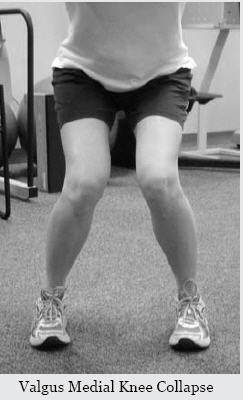
2.  Don't Let Your Knees Travel Inward

Whether its your takeoff, or your landing, don't let this happen.  You might even want to concentrate on having your knees travel to directly away from each other, as this increases stability in the foot, ankle, knee complex.  It will minimize the stress on your body.

3.  Step Down
         Now if you're a highly competitive Crossfit type you might not like this one.  It's true that if your just going for performance, jumping down is faster.  However it adds so much force to the calf, achilles tendon, ankles and plantar fascia that it significantly increases the chances of you injuring yourself.  Alternating which foot you step down off the box will allow you to minimize the stress on your body without wearing down either leg.  

If you have any questions or are injured, please email me at drscotthoar@gmail.com.  If you are in the Boca Raton area, you can visit us at www.Mobility-4Life.com

Tuesday, December 10, 2013

The Best Exercise to take away your Neck, Back and Shoulder Pain

This is my favorite exercise to do on my own to keep my low back and shoulders feeling good.  I teach it to a bunch of my patients that are experiencing similar conditions.  It's fantastic for increasing the flexibility in the upper back to relieve stress on the neck, shoulders and low back. They're called:

Can Openers


To perform this:
  • Lay in the side-lying position with your top knee bent and in front, with the knee higher than parallel to the hip
  • Extend both arms in front of the body with the hands together, even with the shoulders.  
  • Rotate the arm, head and eyes to look behind you as far as possible without the knee coming off the ground.  NOTE - keep your eyes fixed on your thumbnail as you reach behind you.
  •  SECRET - Press into the ground with the top knee and stationary arm.  This will provide stability and allow for increased flexibility of the upper back without involving the hips or lower back.
  • Once you've gone as far as you can go, return to the starting position.  That's one rep.  Perform 6-12 reps on each side.
This is a perfect warm-up before doing other more strenuous exercises.  This will result in decreased stress on the shoulders, neck, and low back.

For any questions or to schedule a personal appointment in Boca Raton please email me at drscotthoar@gmail.com or dial 561.997.8898.  Keep moving!!!!  To check out more visit www.Mobility-4Life.com

Tuesday, August 13, 2013

Staying in Shape While Injured

Maintaining you physique and fitness levels while injured can be a tricky thing to do.  I always recommend substituting non-painful exercises for the ones you know bother you, or you just don't do so well.


Here's an article to check out regarding how exactly to do that.  http://www.backtothebox.com/how-do-i-fit-my-prehab-or-rehab-into-my-physical-performance-program-4/  

This is a bit 'Crossfit-oriented' but his template can be utilized in any exercise program you choose.  Happy reading!  

If you have any questions please contact me at drscotthoar@gmail.com.  To check out more visit www.Mobility-4Life.com

Wednesday, July 24, 2013

Neck Position During Exercise

When I walk into the local weight room one of the most common mistakes I see are people performing exercises without a neutral spine.

This could lead to lower neck/upper back pain
It's all too common that strength coaches and trainers are recommending looking up while performing activities like squats and deadlifts.  They do this in order to keep you from bending forward while lifting, which is bad.  But complete neck extension isn't the answer.

To minimize stress on the spine, you always want to be in neutral.  This is why during most movements you want to bend at the hips, not the low back.  This protects your lower back from injury.  However when one extends the neck tremendously during a movement, they are no longer protecting the neck.

I recommend having a neutral neck during lifting.  This will protect the commonly injured lower neck/upper back from undue stress.


this is the best pic I could find, I'd prefer his eyes looked a little lower
A great coaching tip for this is to have your gym goer keep their eyes fixed at either the floor about 8 feet in front of them, or fixed on the bottom trim of whatever wall is directly in front of them.

Save those necks!

For any questions/concerns or if you'd like to schedule an appointment please contact me at drscotthoar@gmail.com or phone me at 561.997.8898.  To check out more visit www.Mobility-4Life.com

Wednesday, July 10, 2013

Your Shoulder and Surgery

Hope this isn't too gross for you guys!
 Shoulder surgery is very common these days.  Typically it's repairing a torn rotator cuff or an arthroscope for degeneration.  Typically after you have surgery, your orthopedic doctor recommends you complete a rehab progression with a physical therapist.  I agree with that.  But what happens after that?  (This approach really applies for surgeries throughout the body, not just the shoulder)

After about 5-6 weeks, broken bones have stabilized.  After about 2 months, most soft tissues will have stabilized. (Nerves can take much longer but you're dealing with a neurosurgeon at this point so that's a different conversation).  What do I mean by 'stabilized'?  I mean you should be free to put weight on the area, to start exercising the area and so on.  Normally your physical therapist is in charge of that and will do a fantastic job for you.  My advice?  Go to physical therapy!!!

But now you've done your course of 3-6 weeks of physical therapy.  They're released you from care, but the area just isn't the same.  And you wonder what to do?  The answer?

A soft tissue chiropractor!  I'd highly recommend one that performs Active Release Technique (A.R.T.), Graston Technique, and utilizes corrective exercises and Rehab.  Surgery and other serious injuries leave you with scar tissue, which can be viewed as a rubber band (muscles) that suddenly feels like a piece of leather (scar tissue).  The techniques described above help to restore the scar tissue to it's normally quality.  When the tissue quality normalizes, the alignment of the shoulder (or wherever else in the body) is able to return to normal and you can start using your shoulder again.

In the mean time?  Wall Walking is always great for range of motion at home.  Here's a video with a pretty lengthy description if you have four minutes:


If you have any questions feel free to call my office in Boca Raton, FL at 561.997.8898 or email me directly at drscotthoar@gmail.com.  To check out more visit www.Mobility-4Life.com

Wednesday, June 19, 2013

Shin splints

Shin splints.....every runner has heard of them.  This is a very common condition. It occurs when there is an overuse injury of the muscles of front of the shin.

There are two kinds: one is just to the outside of the shin bone, one is just to the inside.
What causes it? Typically one of 4 things. It's probably an alignment issue of the lower body stemming from an inflexibility in the foot, ankle, knee or hip. Sometimes it's a stability problem of the arch of the  foot as well.  Flexibility in the joints of your lower extremity serve as the shock absorbers to your lower body. When you have muscle or joint restrictions in the foot, ankle, knee or hip you will add more stress to the lower legs.  Shin splints occur because the two possible muscles involved (tibial is anterior or posterior) are the smallest, thinnest muscles of the lower leg aka the weakest link.
How can you tell if you are at risk for this problem? 4 ways. This will be fun to do on your own


Hip flexibility: can you bend over and touch your toes?(without bending your knees)
Knee flexibility: can you easily pull your knee up to make contact with your butt and easily lock out the knee?


 Ankle flexibility: this ones tricky. Kneel on one knee with the front foot about  one fists distance from the wall. Can you lean forward and touch your knee to the wall (just slightly to the outside of the foot) without your heel coming off he ground?


 Toe flexibility: while standing press your toe into the ground and lift your heel up as high as possible. What angle does the foot make in relation to the toe? If its less than 70-90 degrees than you have a problem.


To improve your flexibility you can do joint mobilizations.
Mobilizations that are just like the assessments.  Rock back and forth into the end range of motion with the particular joint that your trying to affect. Don't hold it too long, then you'll be stretching a muscle.  Joint mobilizations are more effective to making the difference than muscle stretching is.

If you already have shin splints I recommend getting an evaluation with your local sports medicine professional. Be careful, if you let the problem go too long it could turn into a stress fracture which is a pain in the neck to get rid of.  Feel free to schedule an appointment in my office in Boca Raton by dialing us at 561.997.8898 or emailing me directly at drscotthoar@gmail.com.  To check out more visit www.Mobility-4Life.com